
Case study
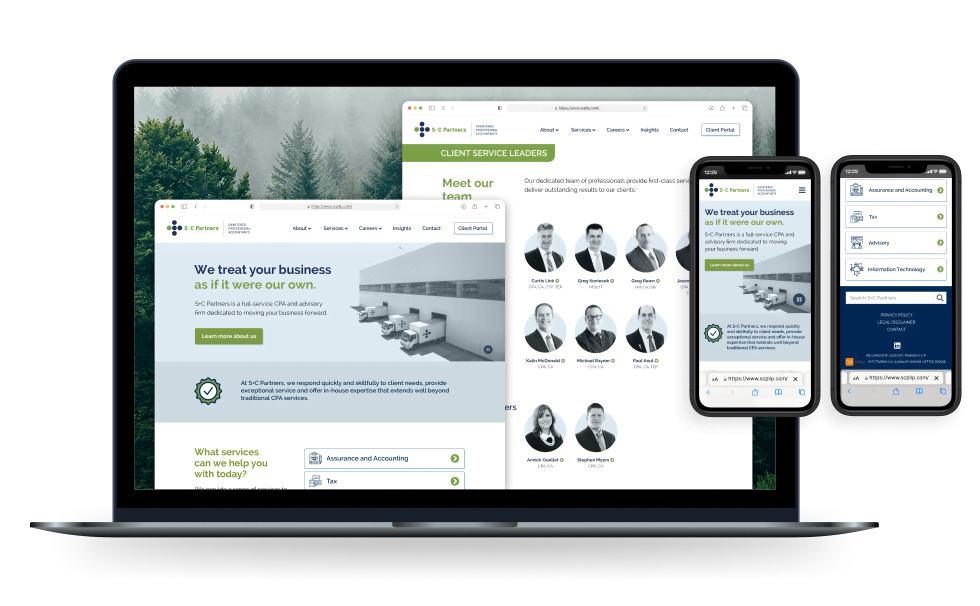
I redesigned the website for an accounting services firm to improve customer wayfinding, drive up contact rates, and increase customer conversions.
While freelancing full-time for a small agency, Collective Experience, I worked with S+C Partners, a client who approached the agency for a website redesign. As we dug in, it became clear the underlying issues went deeper than the website — the client needed a more cohesive brand strategy and vision.
I collaborated with the agency to enhance their brand and tackle the opportunities identified by our team's research.
We began with discovery research to understand the firm's clientele, services, business goals, opportunities, and competitive advantages.
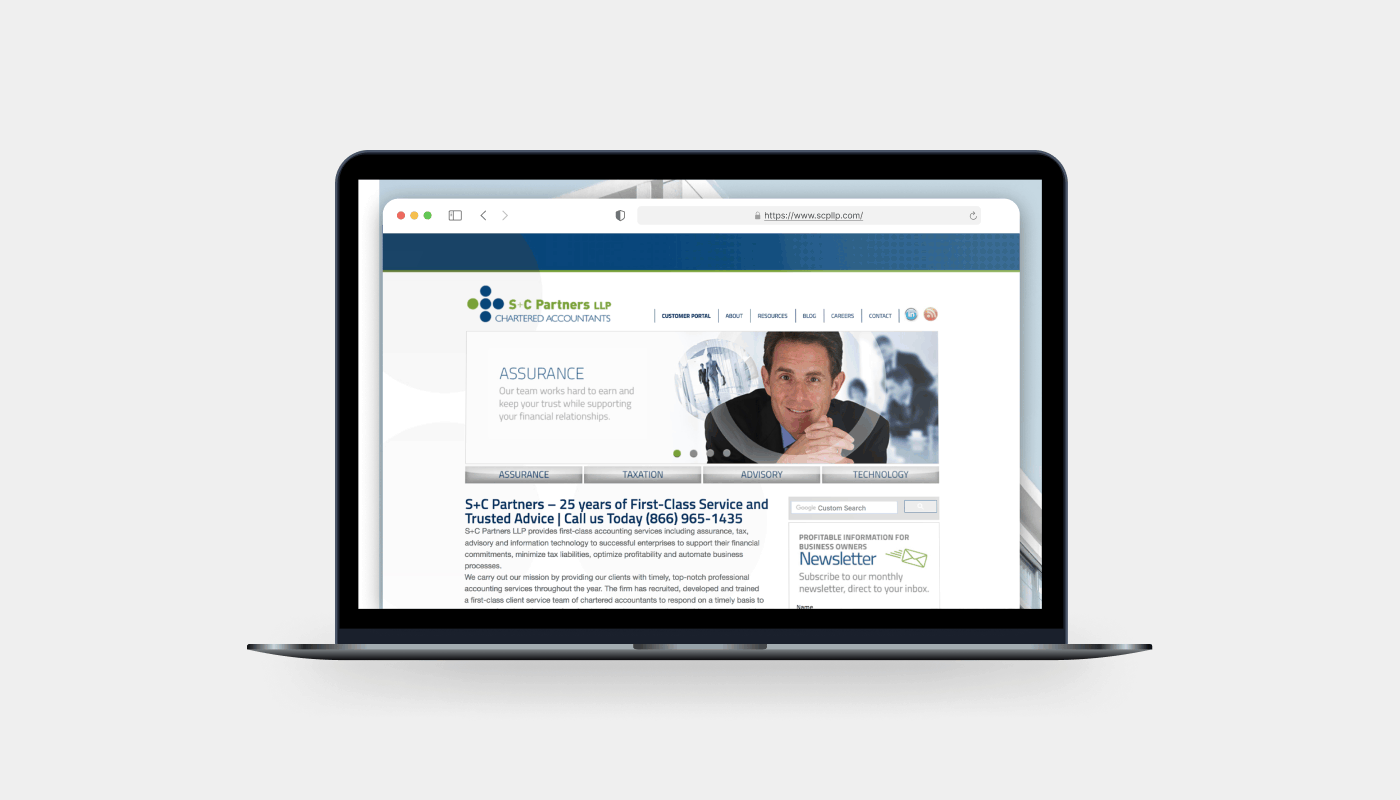 Old experience
These activities included:
Without a brand design, users did not perceive the firm as a distinct or competitive option compared to competitors offering similar services.
The multi-leveled navigation, lack of mobile responsiveness, and cluttered visual hierarchy led to slower task completion rates.
No clear call-to-action guiding users from a service page to contacting the firm, leaving interested visitors without a next step.
Messaging didn't speak directly to the firm's primary audience of entrepreneurs and private corporations in construction, manufacturing, and distribution.
How might we redesign the website so high net-worth clients can quickly find the right services and easily connect with the firm?
It became clear from the research that the underlying issues went deeper than the website — the client needed a stronger brand strategy.
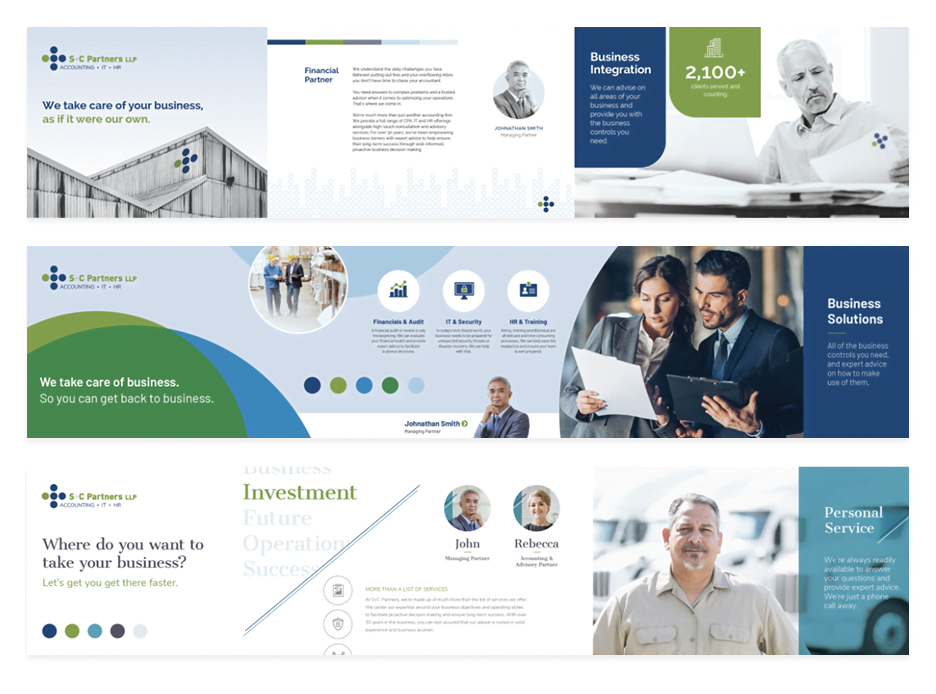
Taking in what we learned about the business and its clientele, I collaborated on brainstorms and created 3 approaches to their visual brand.
The final concept paired large-scale imagery with industrial architecture, tying into the client's manufacturing, construction, and distribution industries. It also introduced a cooler, muted colour palette accented with their existing blue and green to add warmth.
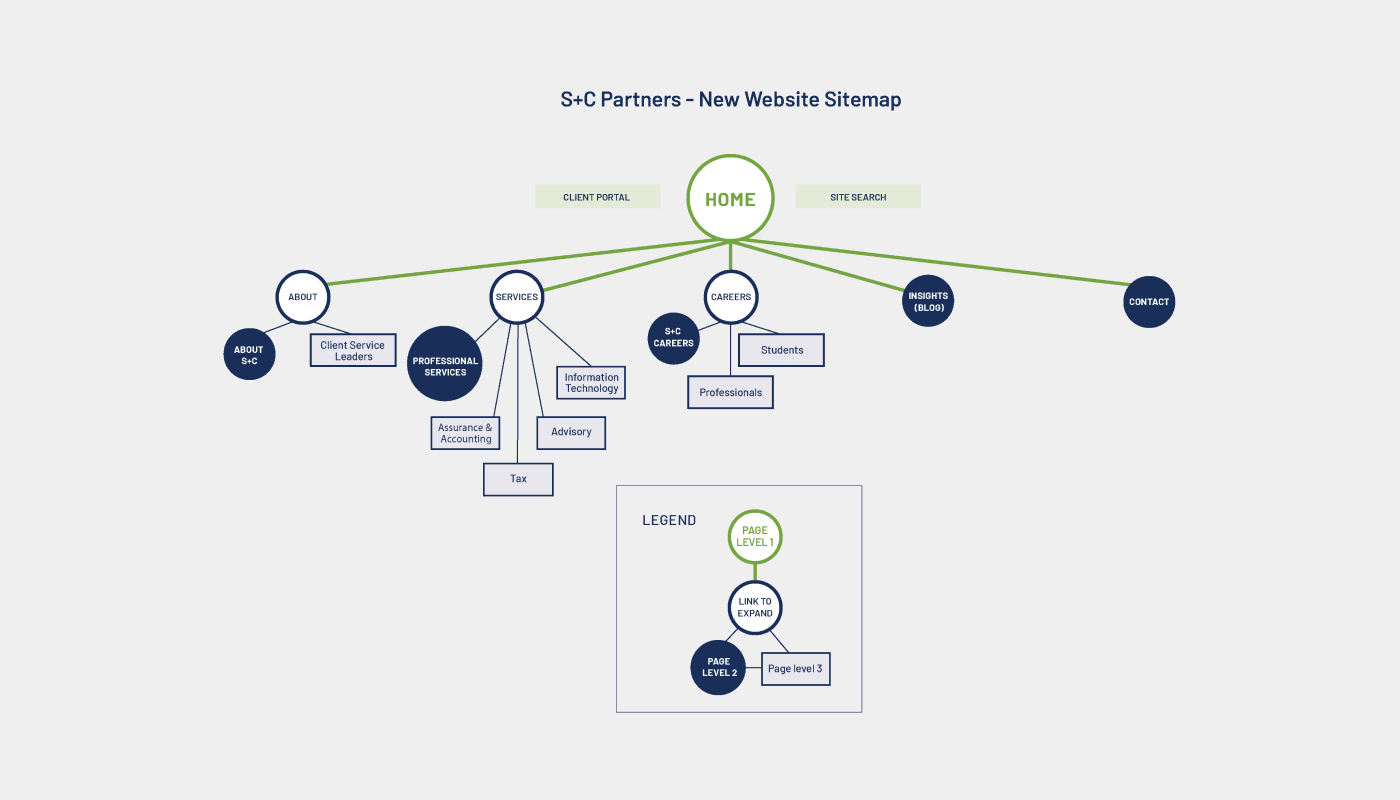
After establishing the branding system, we mapped out the old website's information architecture, then affinity-mapped key content to produce a revamped sitemap.
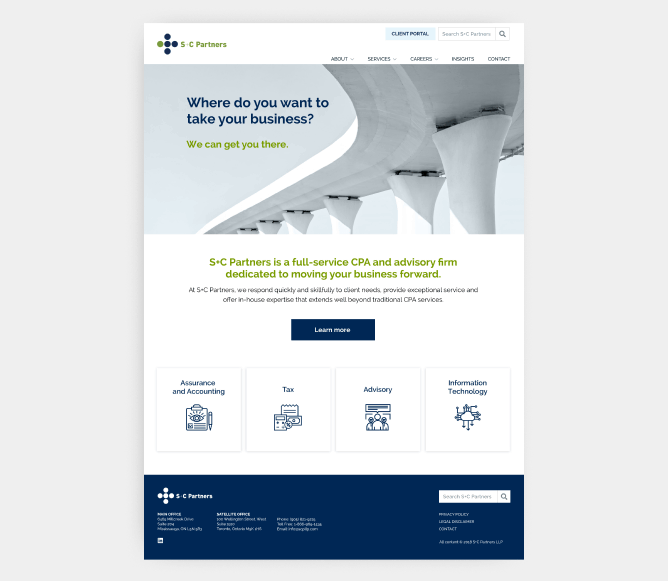
Feedback circulated around the vagueness of the hero and landing page text. The 4 key services were also not obviously clickable.
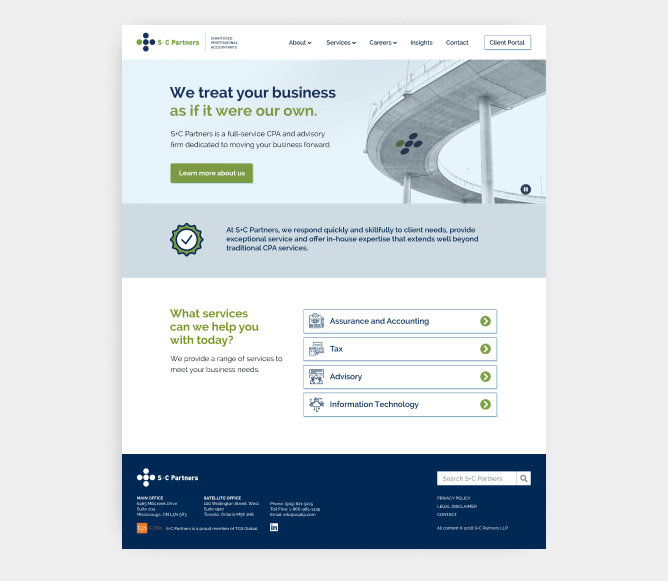
We became very intentional with content direction, explicitly stating the firm's purpose, and converted the 4 key services into more prominent buttons.
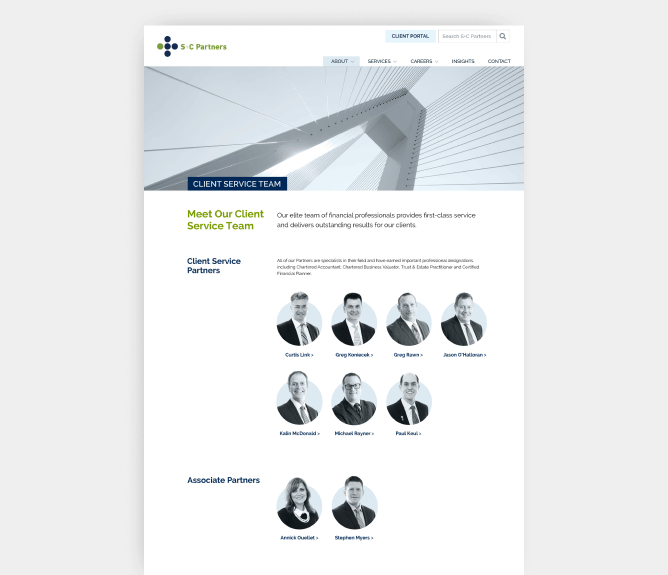
A disconnect was noted between photography and page content. Some also found that it was hard to identify the right person to consult.
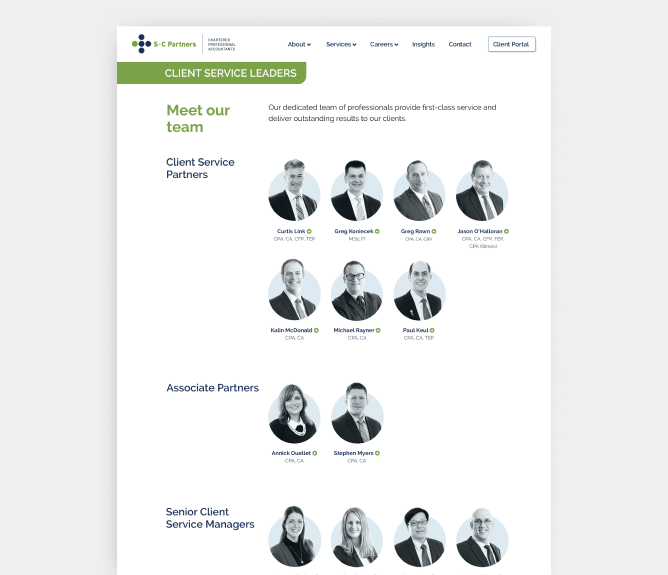
The photography was made more intentional, and dropped if no value was being added. Staff qualifications were added, and their profile made more evidently clickable.
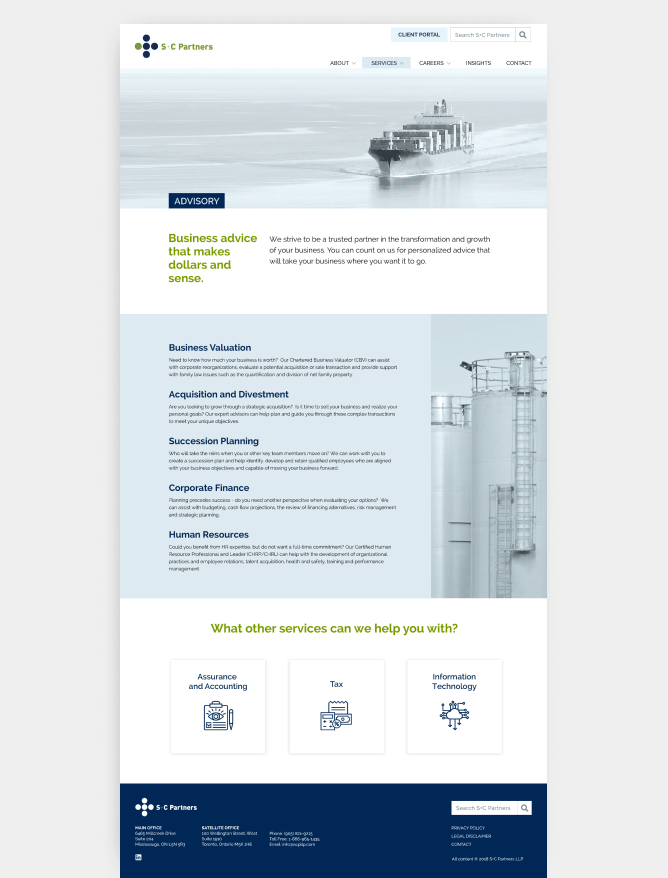
Some found the text size too small. The bulk of text-only also made it less enticing to read through.
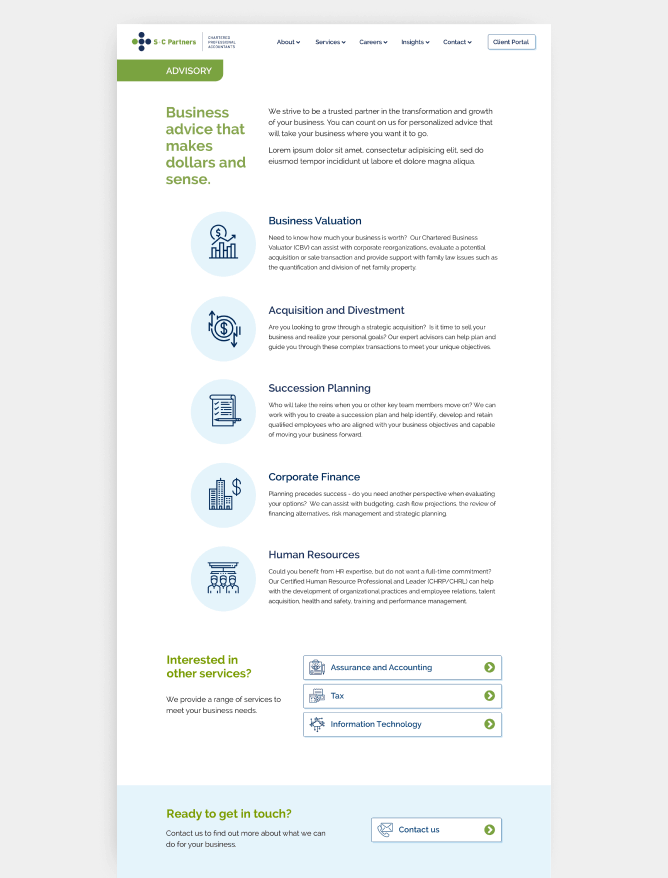
Icons were added to accompany the text and improve scannability. A section was added to key pages with a Contact CTA.
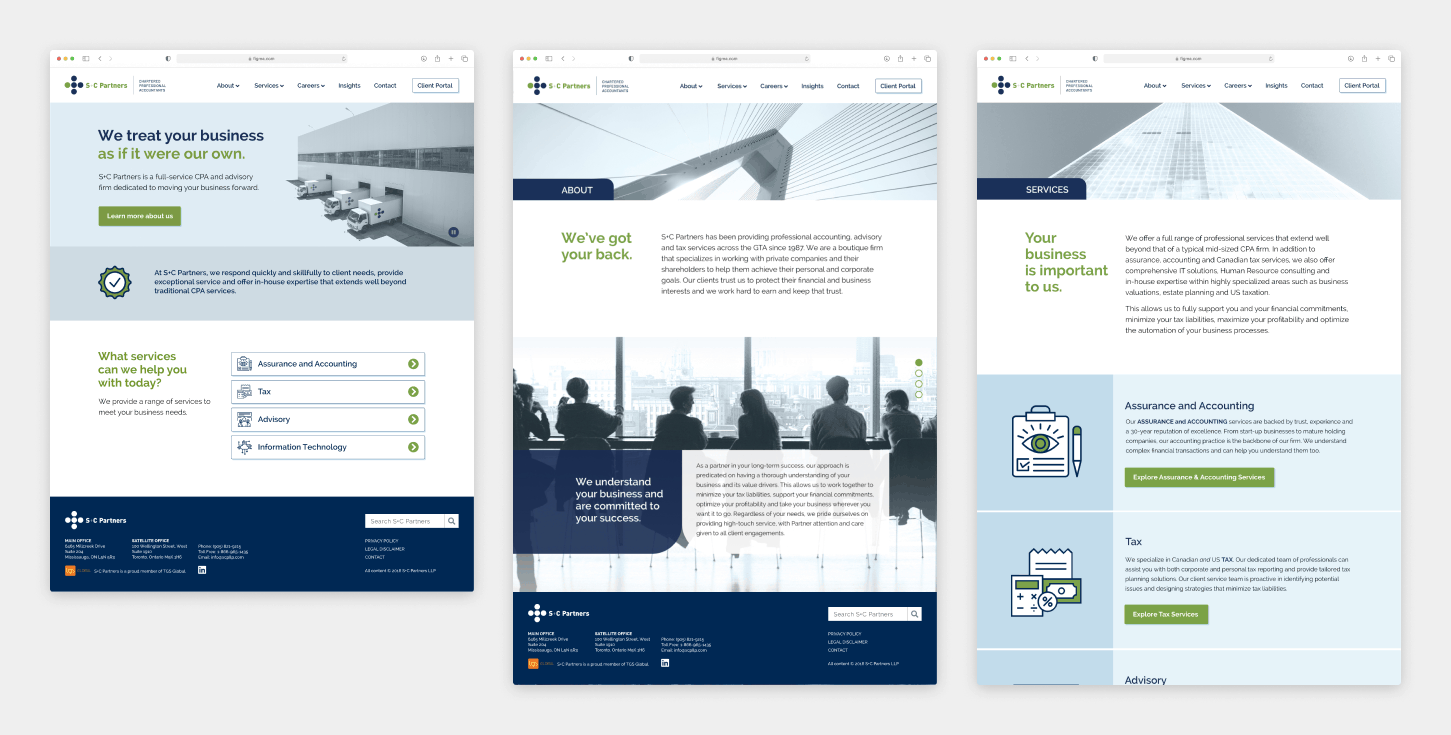
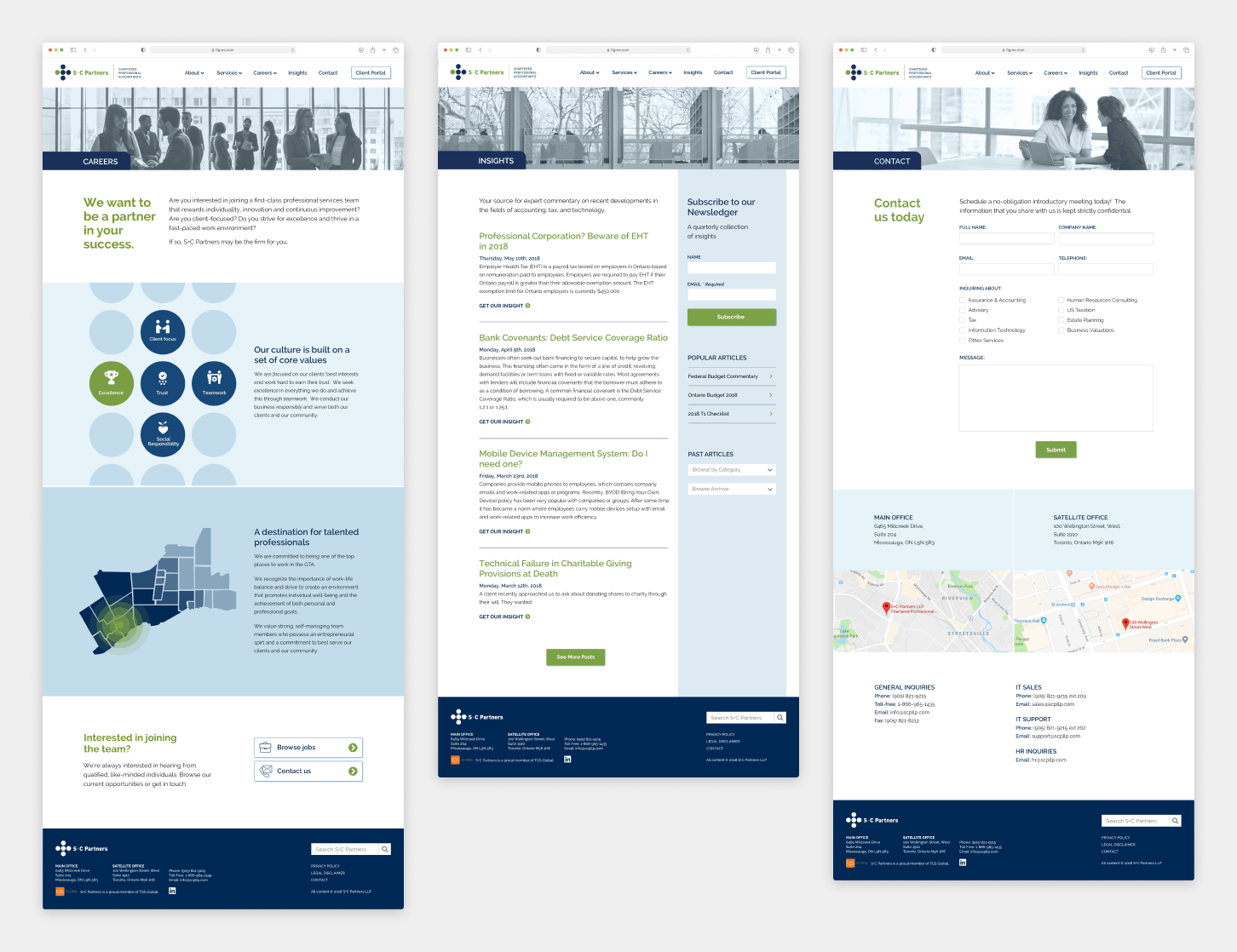
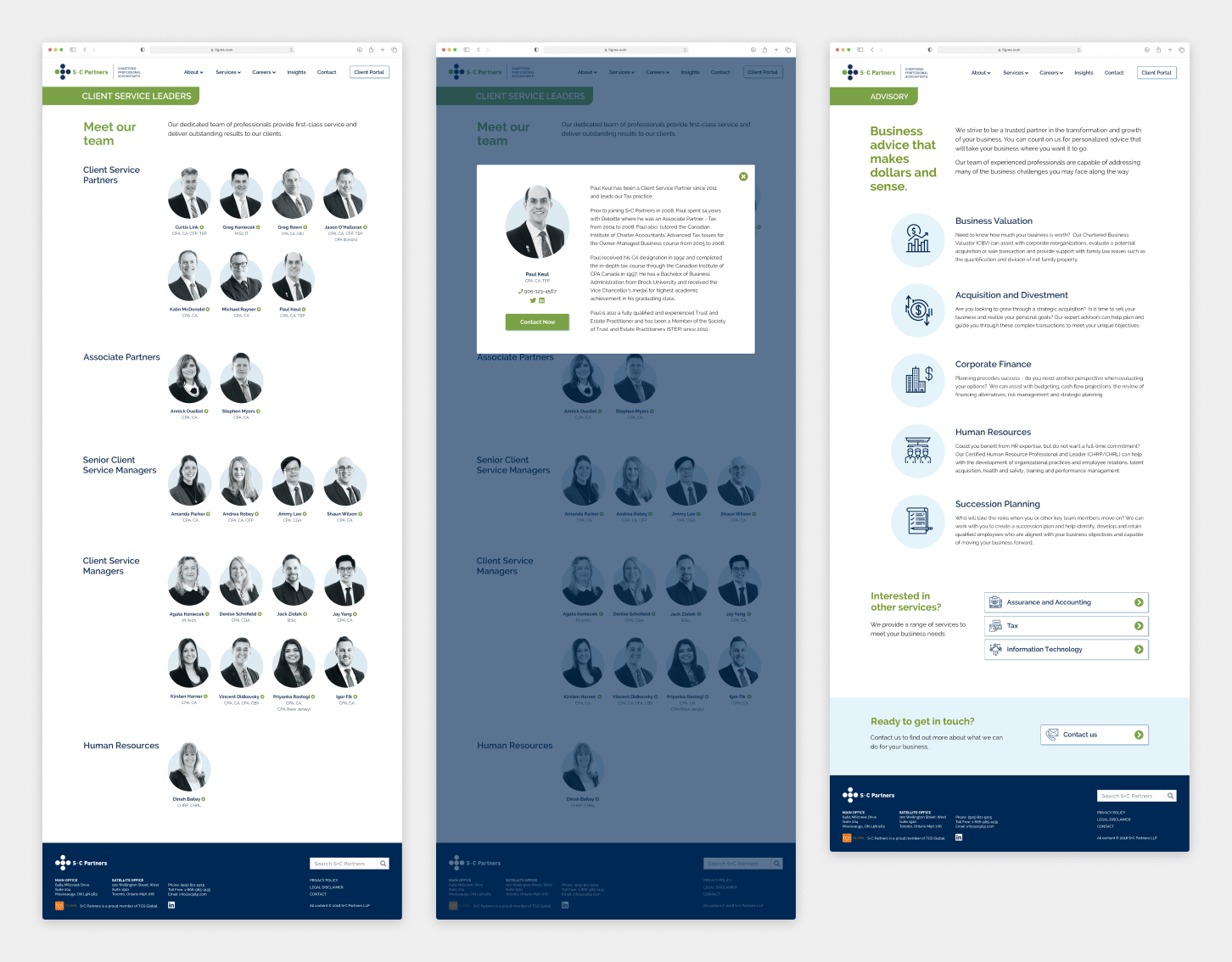
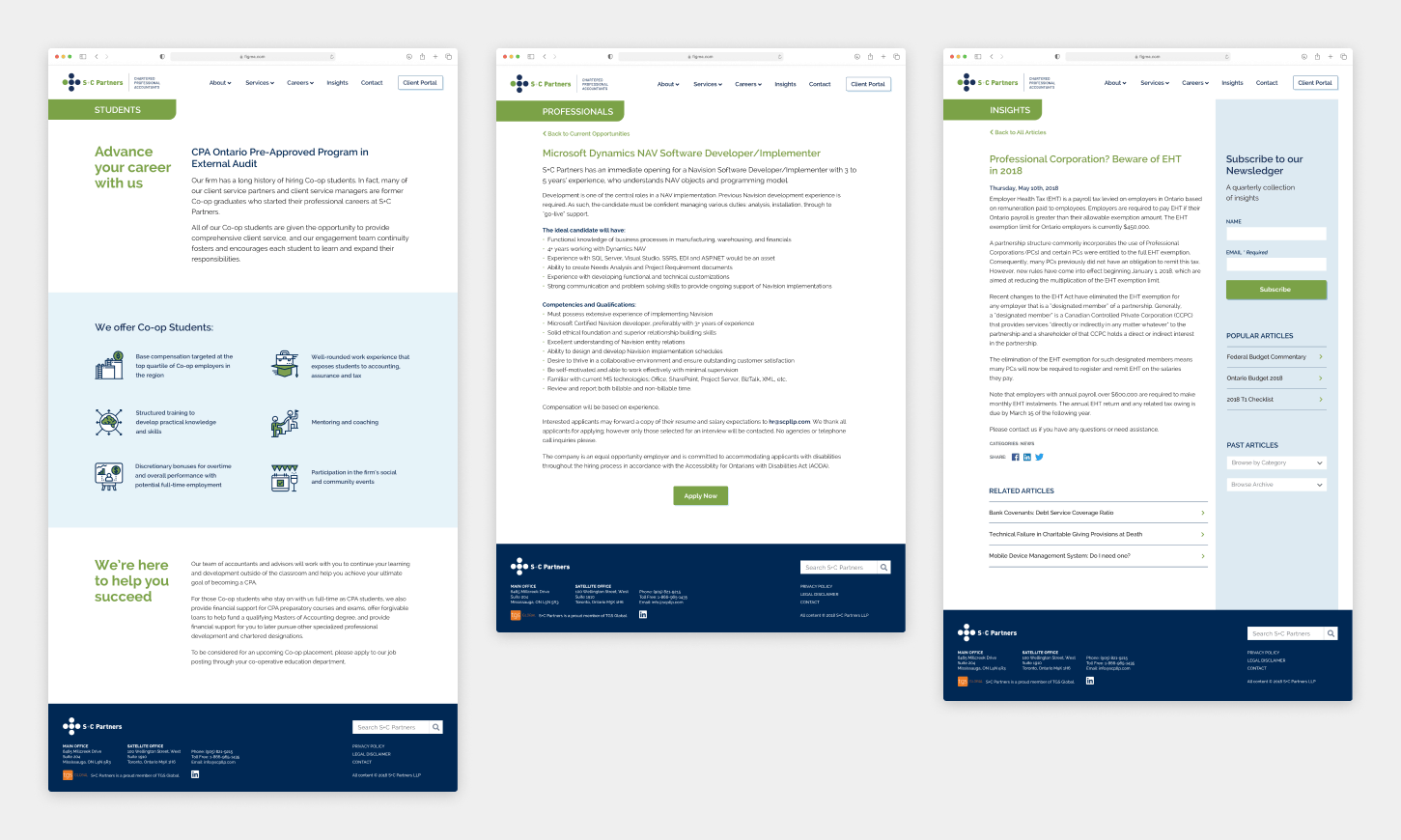
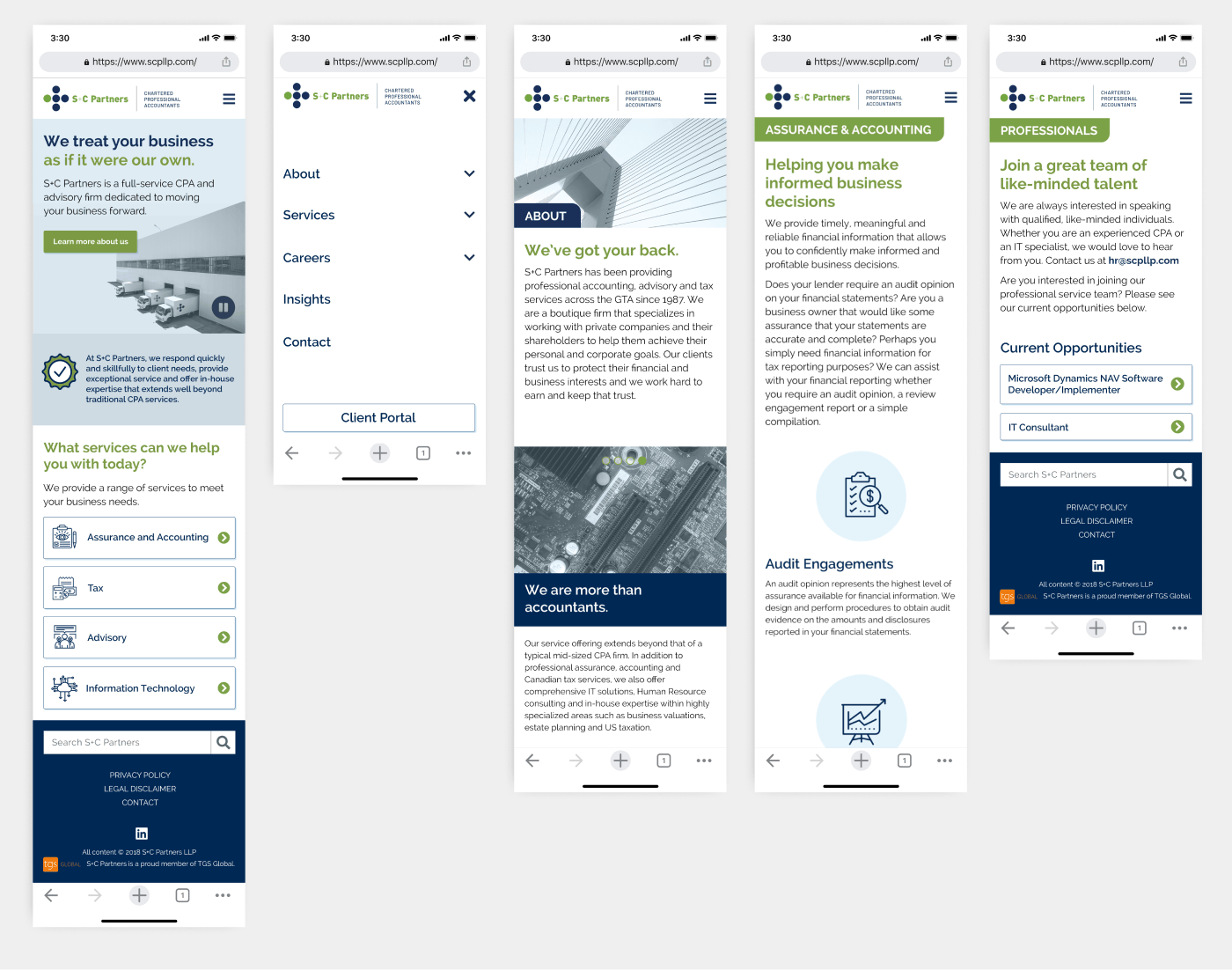
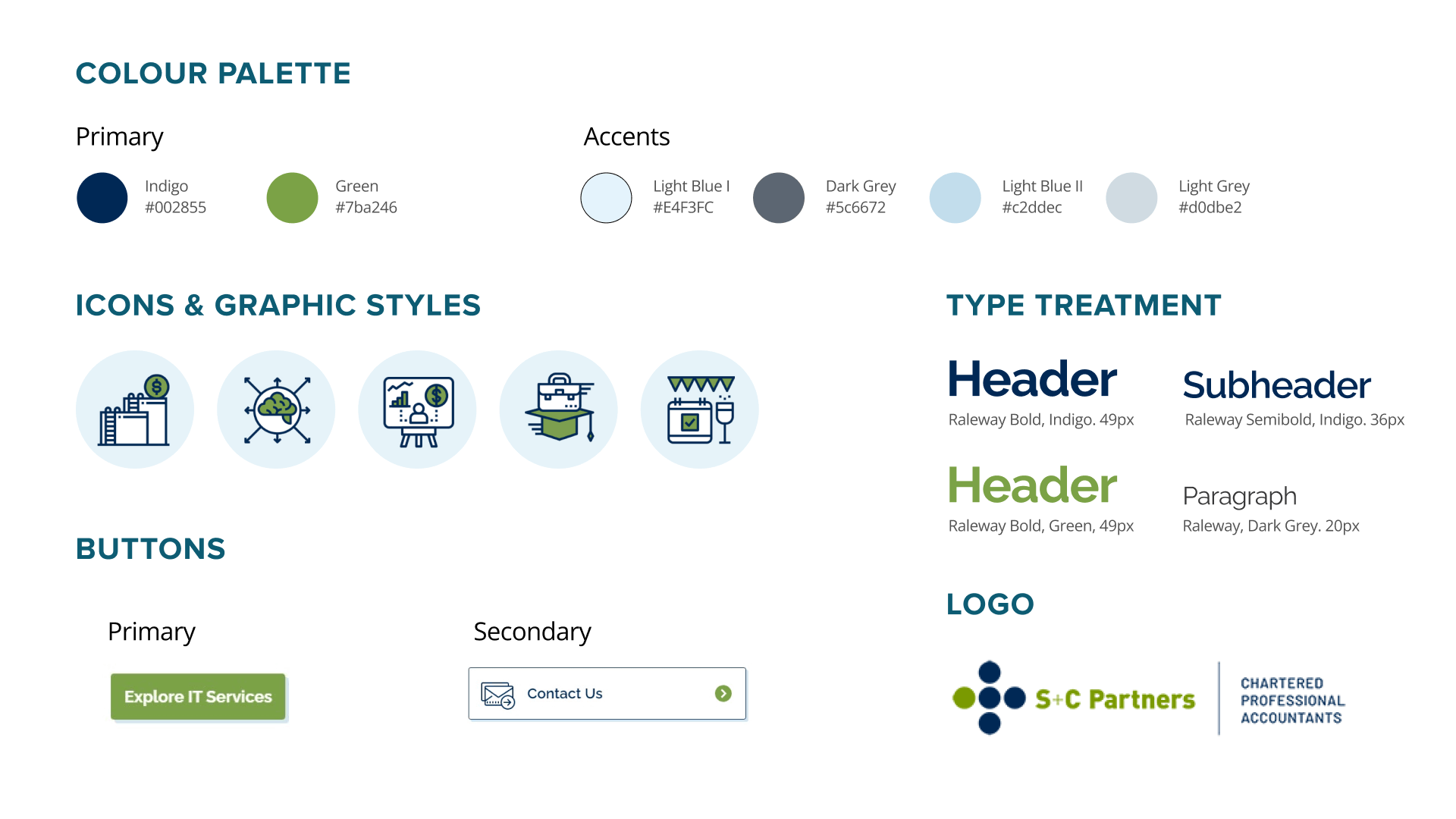
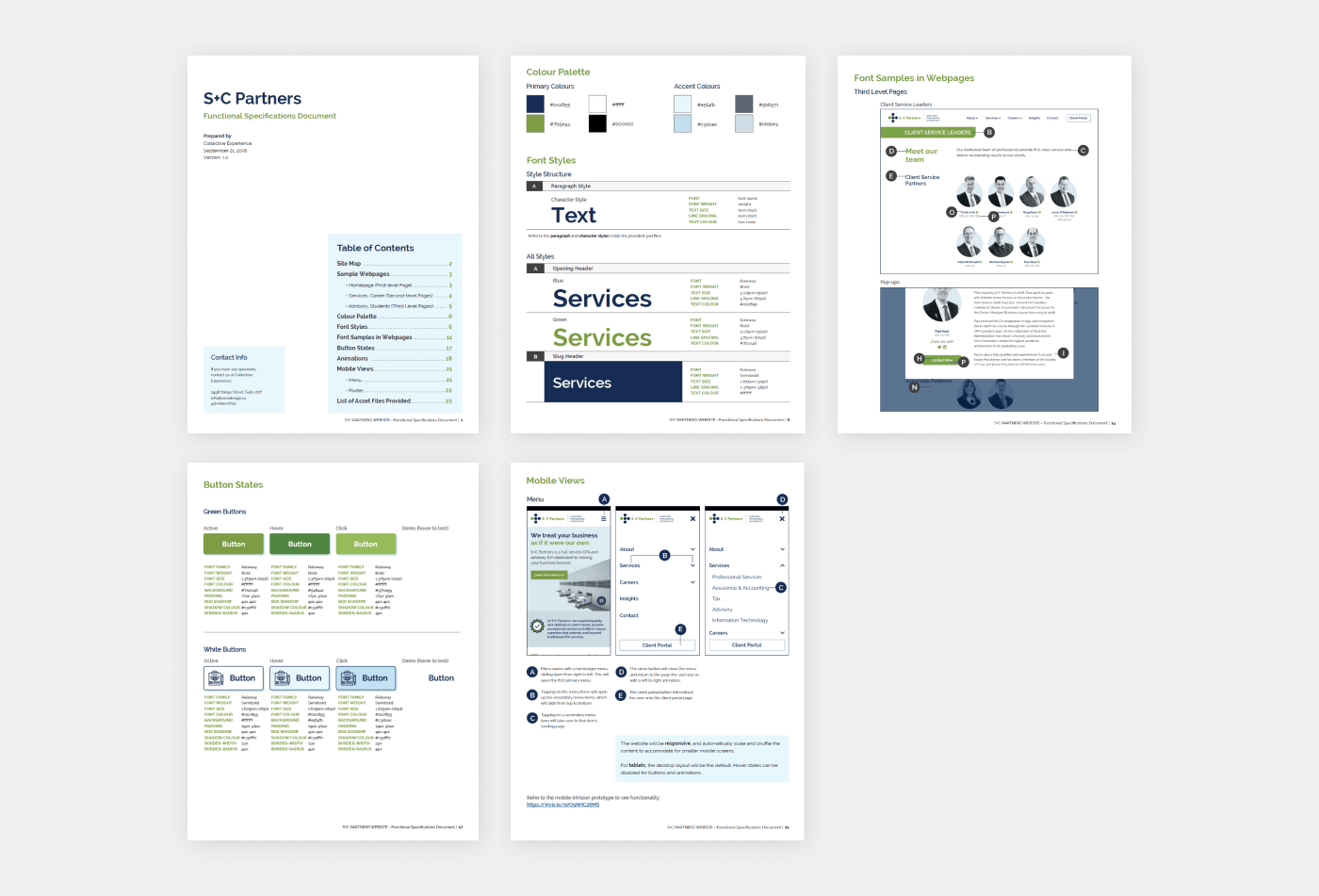
We also provided our external developers documentation to build better collaboration and clarity around specifications. These docs detailed page types, layout, color guides, and font specifications for both web and mobile.
The outcome was an AODA-compliant website which: